About Seagate

  • NEWS: Seagate Delivers Industry's First Purpose-Built 4TB Video Hard Disk Drive Read More

Inside IT Storage

Seagate Enterprise Inside IT Storage

The evolving cloud and how it impacts storage – Part 3 of 4

This past March, Wes Perdue, Seagate’s  Director of PLM Cloud Strategy at Seagate spoke at World Hosting Days in Europa-Park Rust, Germany.  The topic: The Evolving Cloud and How it Impacts Storage.  We have taken the transcript of Wes’s presentation and created this 4 part series covering:

Part 3: Data Protection, Security, and Cold Storage in the Cloud

The Data Protection Model is Different

In traditional IT, hardware RAID, RAID 5, RAID 6 now with the higher capacity drives has been the predominant data protection model.  RAID is also used in these cloud infrastructures, but in large infrastructures, it’s typically not a hardware RAID that’s the predominant data protection model.  It’s replication, and it’s at least 3x.

As we develop storage devices over time, we try to include features to help improve RAID rebuild i.e. hot-swapping drives, hot plugging drives, but quite frankly, not all, but a lot of the largest cloud service providers say we replicate, so we can’t fully utilize such features.  So this is another change in thinking we have gleaned from these these discussions.

Storage Security Requirements

We (Seagate) have this great AES, advanced encryption scheme for data at rest, and they (cloud service providers) say,  “we really can’t use it that way, and, we definitely don’t want a key management system that is complicated, especially in this large scale-out.”

We all know they like things very simple.  However, their challenge is when the drive leaves the data center.  There are two primary use cases, one when the drive is repurposed and goes to another site, and the second is when the drive is retired and destroyed. Typically the process is a third party outside of the data center destroys the drive.  At all costs, the data center will protect the data before that drives leaves the site.  The traditional process has been to wipe the drive.  Now, how long does it take to wipe a 3-terabyte drive?  13 hours.  They wipe it at least 3 times.  39 hours, your looking at days.

They said,  “if you guys could come up with a way to erase the data, and do that in less than 39 hours without a sophisticated key management system, then maybe we can do something.”

So we actually came up with a way to do an instant secure erase in less than a second.  It has a lot of value, especially to these large Internet data centers, and it’s consistent with their current security process. Instead of taking 39 hours to wipe a drive to secure the data, they can cryptographically erase the data in less than a second. So, another example or taking the security technology, our encryption technology, and redeploying it to a feature that fits a need of the cloud space.

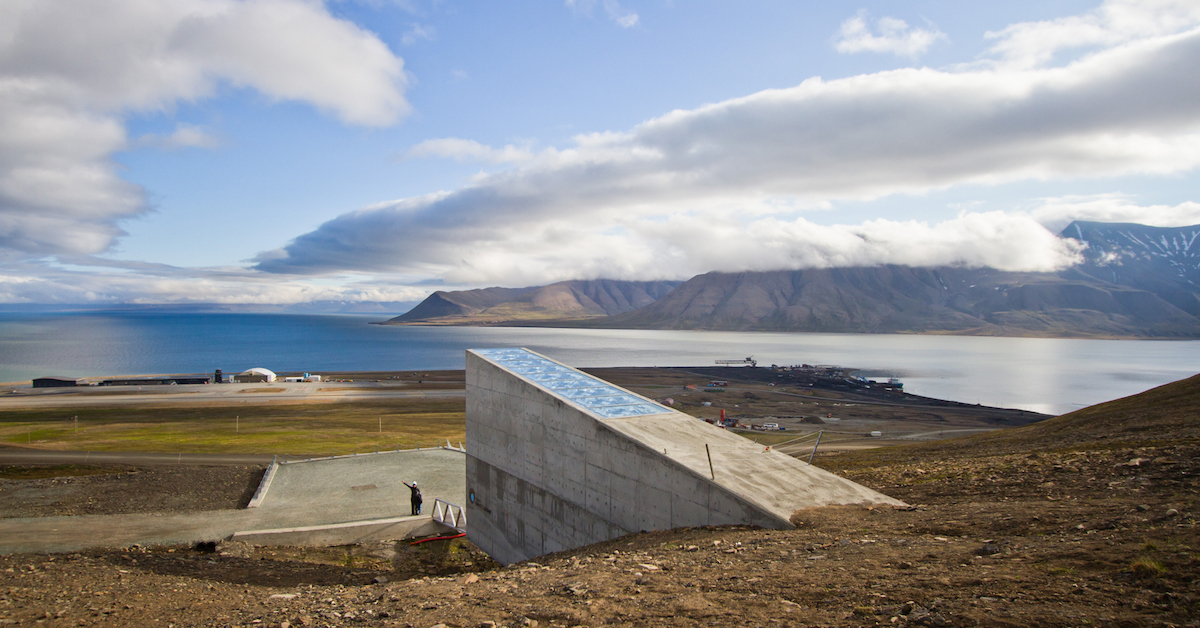
Customer Driven Cold Storage Devices

We are hearing from a lot of the large internet data centers that their customers are saying, “Don’t delete my data. Now, I may not access it very frequently, I may not access it at all, but I do not want you to delete it.”

For business purposes, and for regulatory requirements, there’s more and more data being accumulated. Yes even in the cloud there is archive data, a.k.a. cold data.  Service providers are very good at migrating data and they want a way to transparently migrate data from warm systems to a cold system, and then back up again – bi-directional automated migration. Tape doesn’t lend itself to that. You talk to the tape guys, there’s a lot of discussion, a lot of debate, but when you talk to the tier one guys, they say,

“We have a tape infrastructure, but what we want to do is migrate that data bi-directionally, and we want to do it seamlessly. We can migrate data very well, but we need a storage device, a system that has an extremely compelling dollar per gigabyte, and from a system standpoint the other really key feature is power, I cannot take a lot of power.”

Yet another need in the cloud space in terms of providing a system, providing a storage device, that has the attributes to support this type of a storage need.

So what advice does Seagate provide cloud builders?  We’ll cover that in the next post on The Keys to Success in the Cloud.

Stay tuned.

Related Posts:

The evolving cloud and how it impacts storage – Part 1 of 4

The evolving cloud and how it impacts storage – Part 2 of 4

One Comment

Post a Comment

Your email is never shared.

* Required fields

* Seagate will review all blog submissions and determine, in its sole discretion, whether such submissions will be posted for broader viewing. No blog comment will be considered for posting if deemed potentially damaging to Seagate's reputation or insufficiently aligned with the relevant blog topic. Without in any way limiting the foregoing, no submissions will be posted that contain: confidential company information; profanity; racial slurs; gratuitous references to sex, substance use, or violence; or statements that are in any way contrary to the letter or spirit of Seagate's Code of Business Conduct and Ethics.